Mold Remediation in Rockford, IL
Breathe easy in your own home again.
Three out of four Rockford homes were built before 1980, and older basements hold moisture. The mold gets removed safely and the water behind it gets fixed, so it does not come back.
Free quote · Step 1 of 2
Where are you seeing it?
Or call or text (815) 420-4117See what it costs
- Written price first
- Moisture fixed, not just mold
- No obligation
Free quote
Tell us where the mold is
Where you see it, roughly how big an area, and what got wet. We reply with a written scope and price, and nothing is booked until you say yes.
- Written price firstA scope and a price in writing before any work is scheduled.
- Moisture fixed, not just moldThe leak, seepage or condensation behind it, found and named.
- No obligationNothing is booked until you say yes to the written price.
- Rockford and nearbyLoves Park, Machesney Park, Belvidere, Roscoe, Rockton, Cherry Valley.
Get a free quote
Photos help. A written price comes back before anything is scheduled.
What we do
Mold remediation services in Rockford, IL
Pick the one that sounds like yours, or just tell us what you are seeing. Prices shown are typical U.S. ranges; yours comes back in writing before anything is booked.
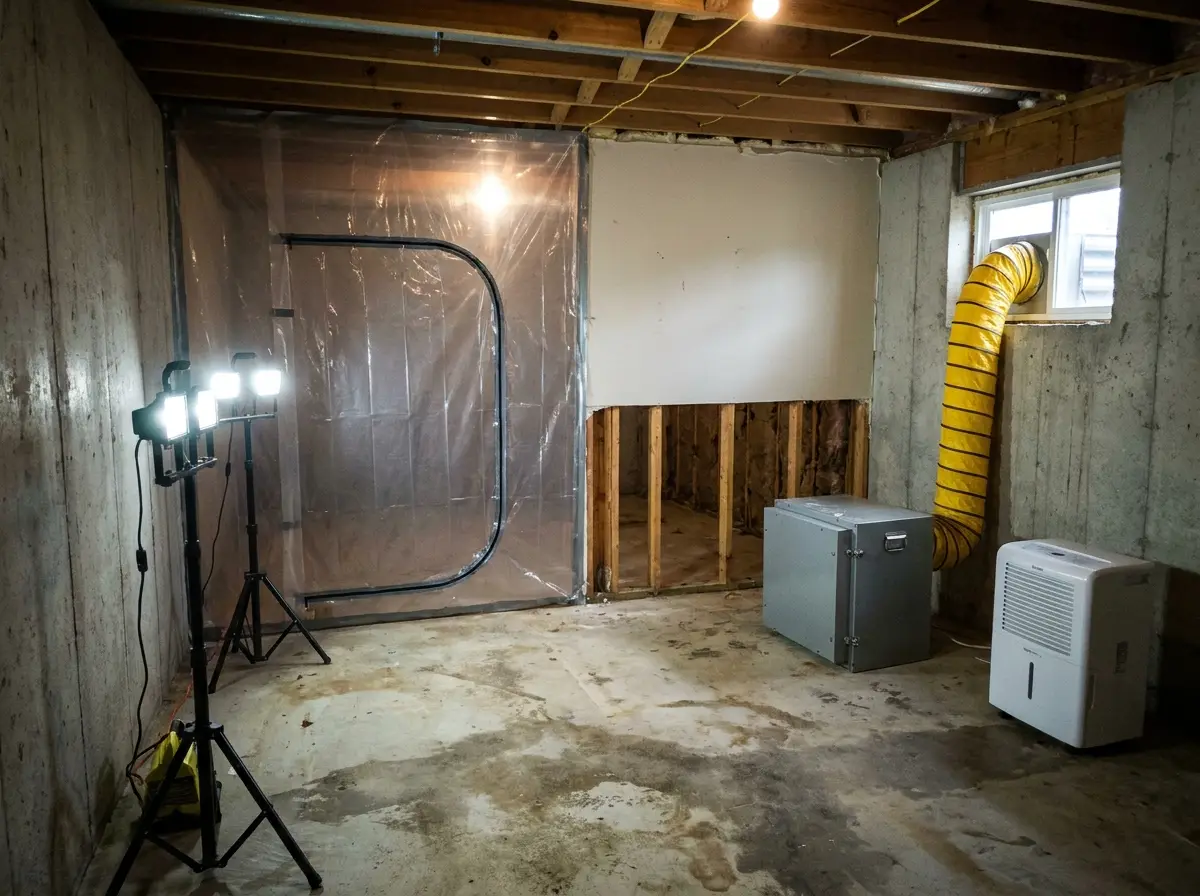 Basement moldWalls, joists and finished basements after leaks, seepage or a flood.Typical: $500 to $6,000See details
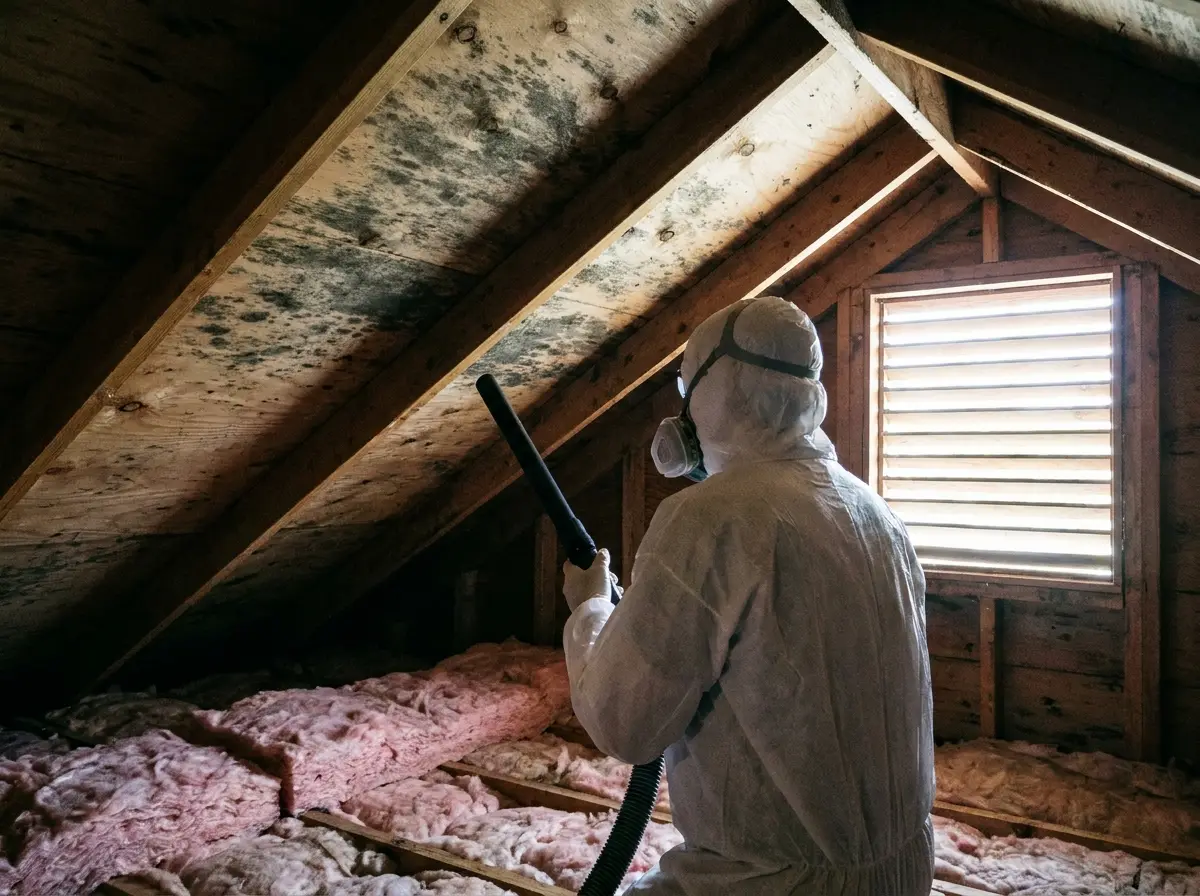 Attic moldRoof sheathing and rafters, plus the venting or bath fan that caused it.Typical: $1,000 to $9,000See details
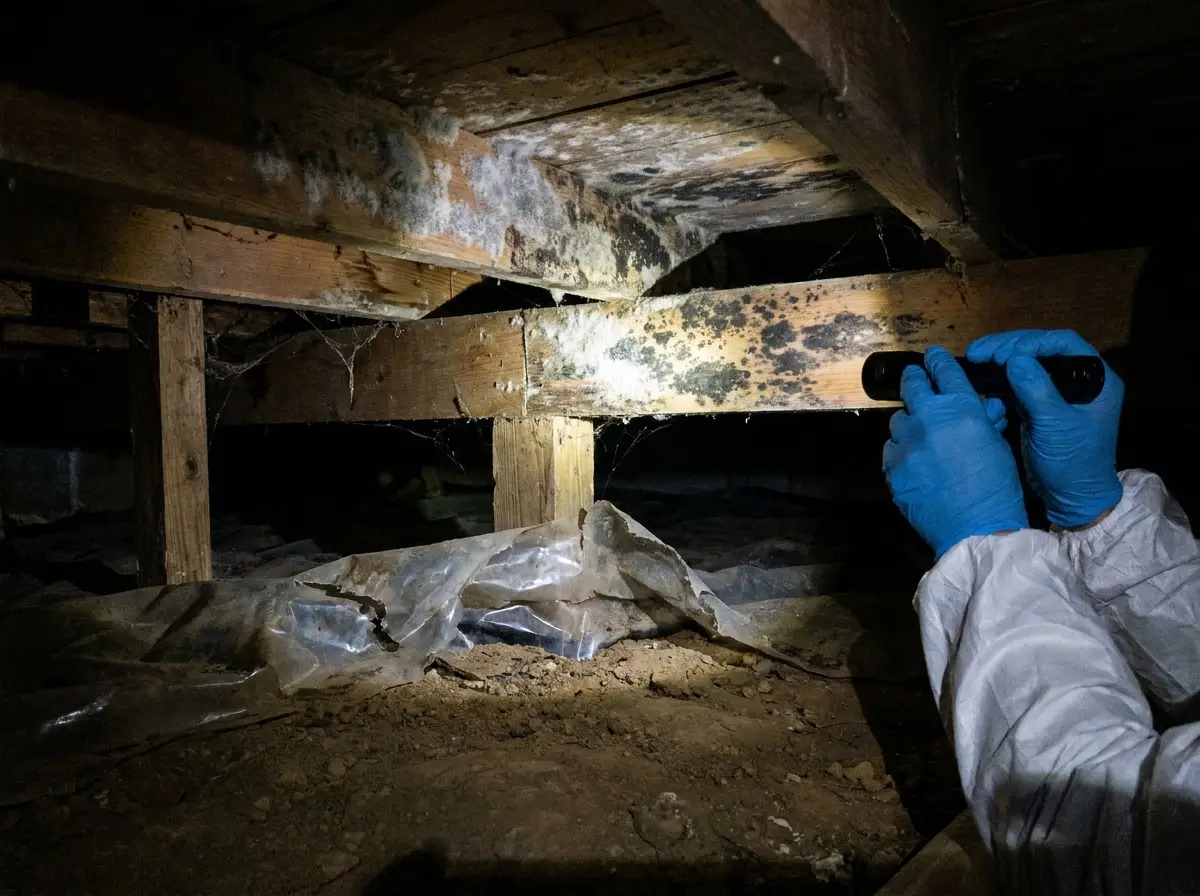 Crawl space moldJoists, subfloor and vapor barrier in damp crawl spaces.Typical: $500 to $4,000See details
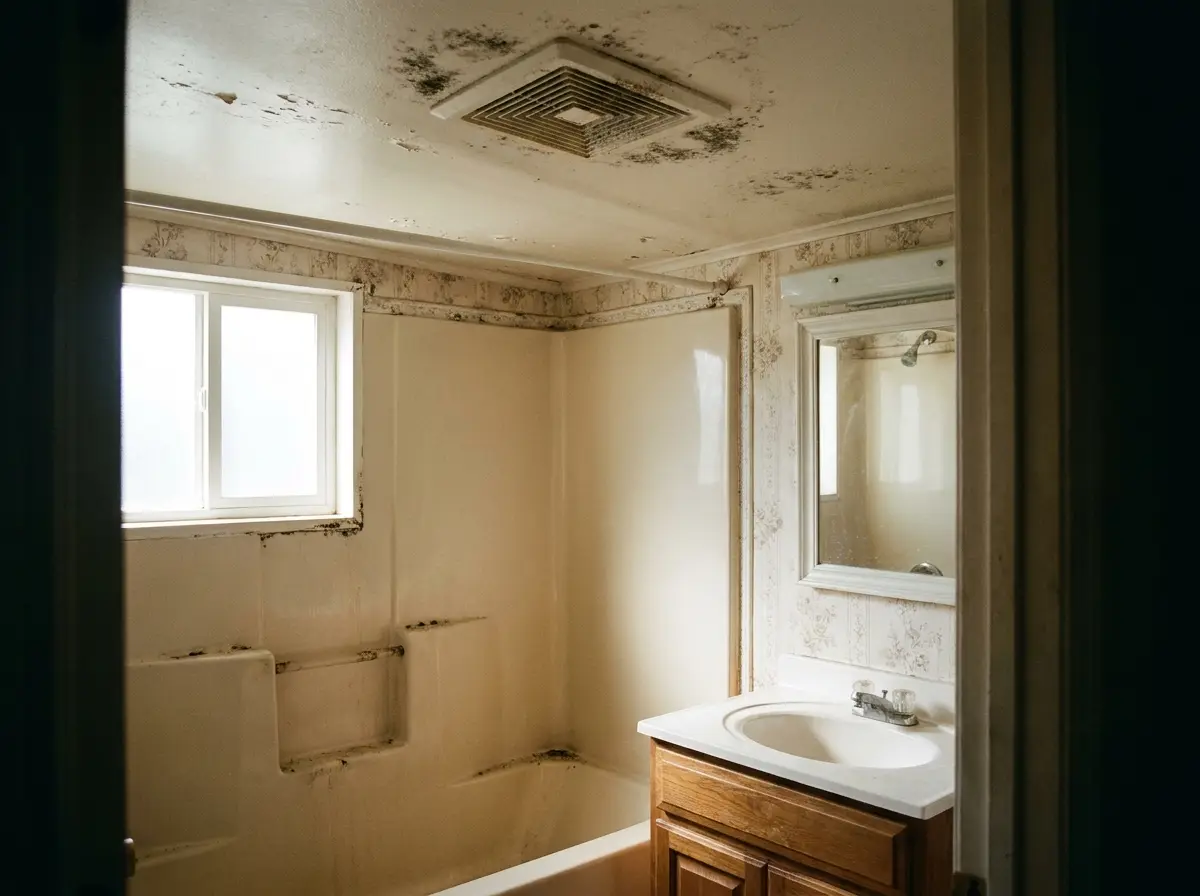 Bathroom moldCeilings, tub surrounds and the wall behind a leaking shower.Typical: $500 to $2,000See details
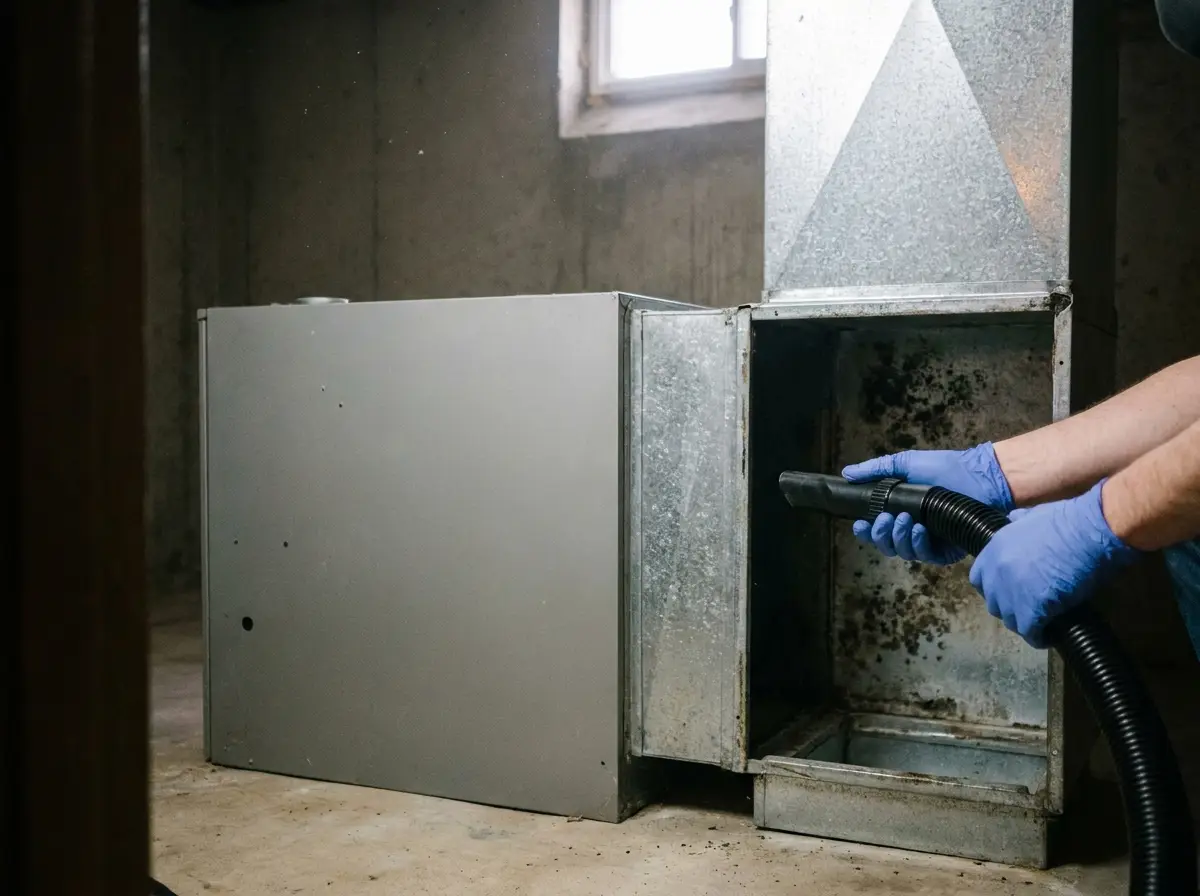 Air duct and HVAC moldDuctwork, coils and air handlers, cleaned or replaced.Typical: $600 to $2,000See details
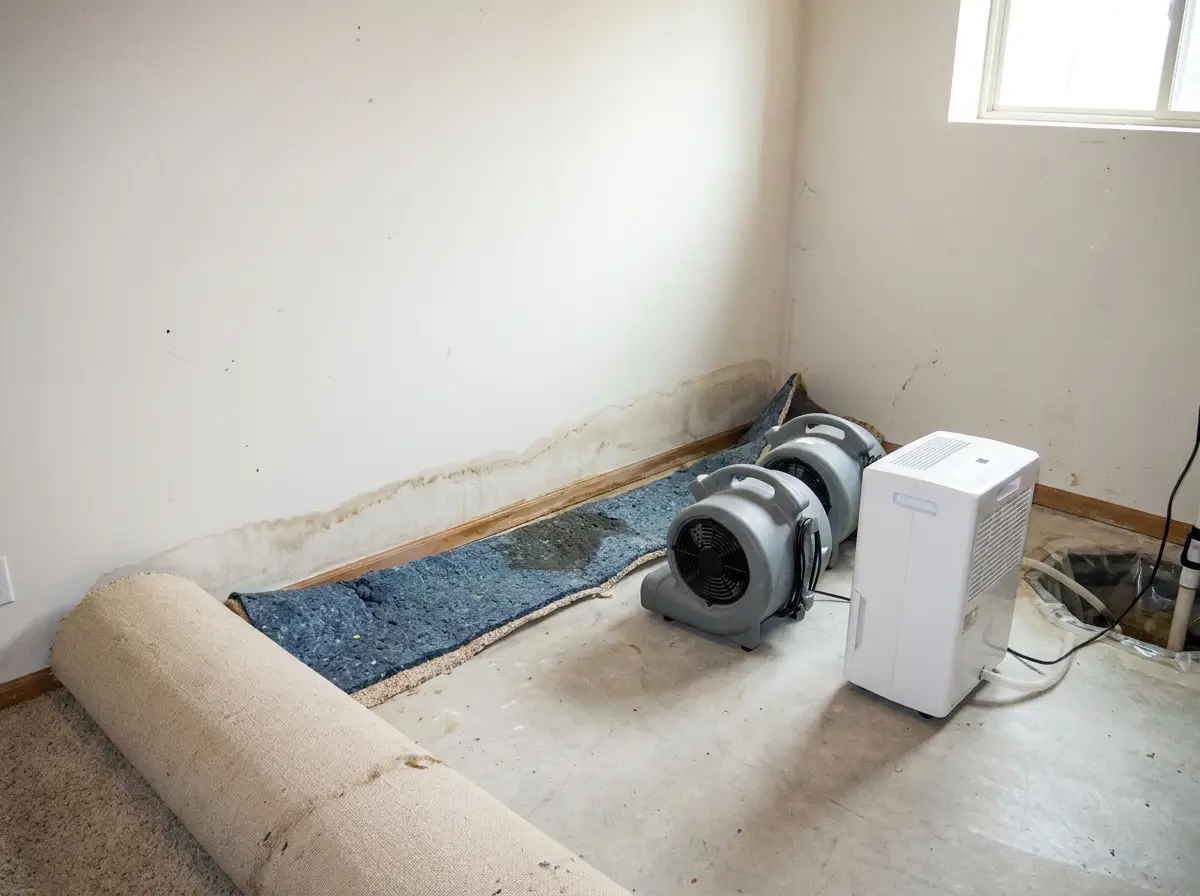 Mold after water damageFlooded basements, burst pipes and sewer backups, dried and cleaned.Typical: $6,000 to $15,000See details
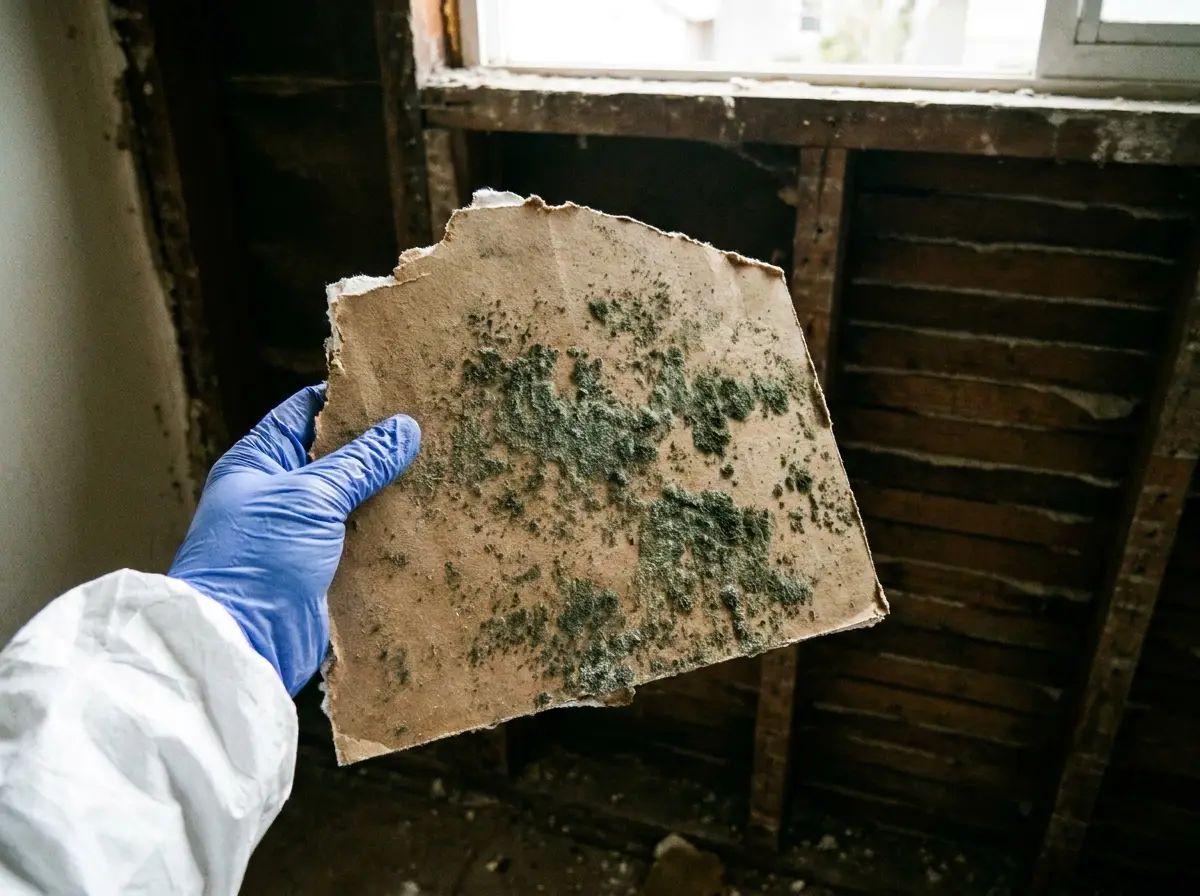 Black mold removalDark growth on drywall and wood, removed like any other mold.Typical: $1,000 to $12,000See details
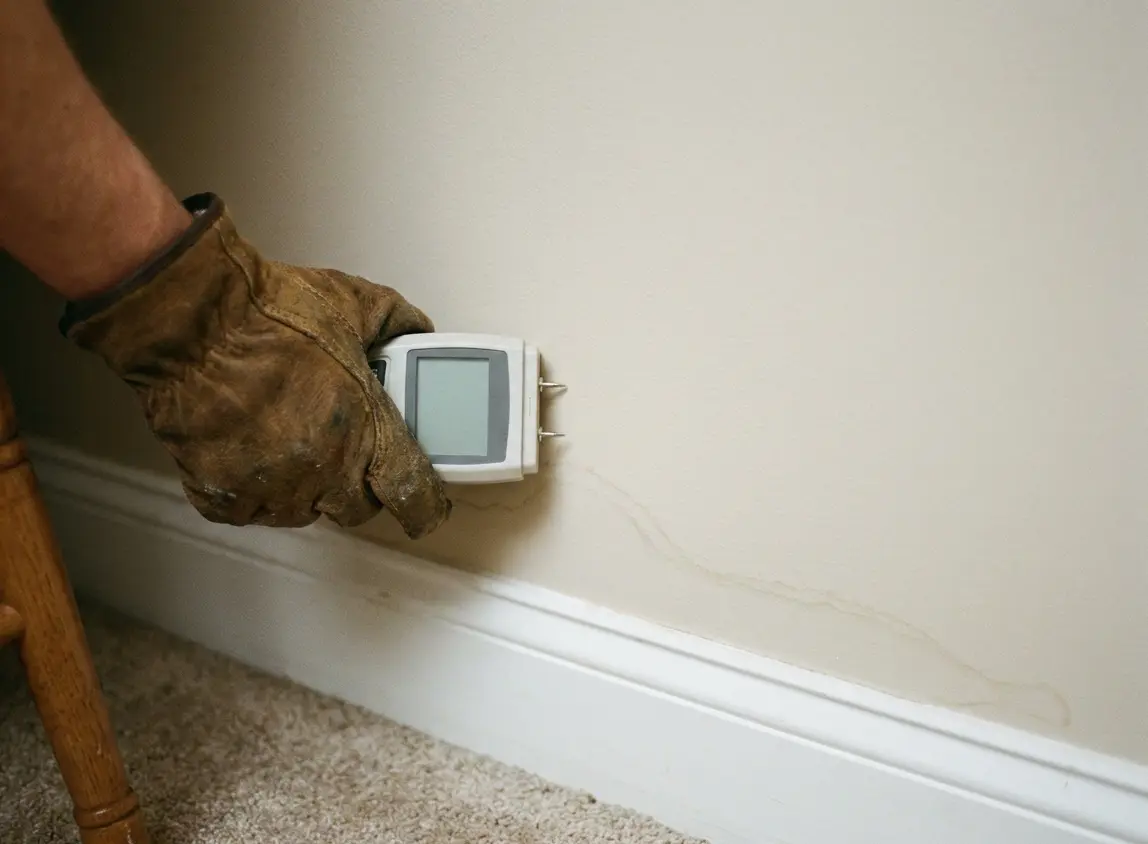 Mold inspection and testingFinding the moisture source and how far the growth runs.Typical: $303 to $1,075See details
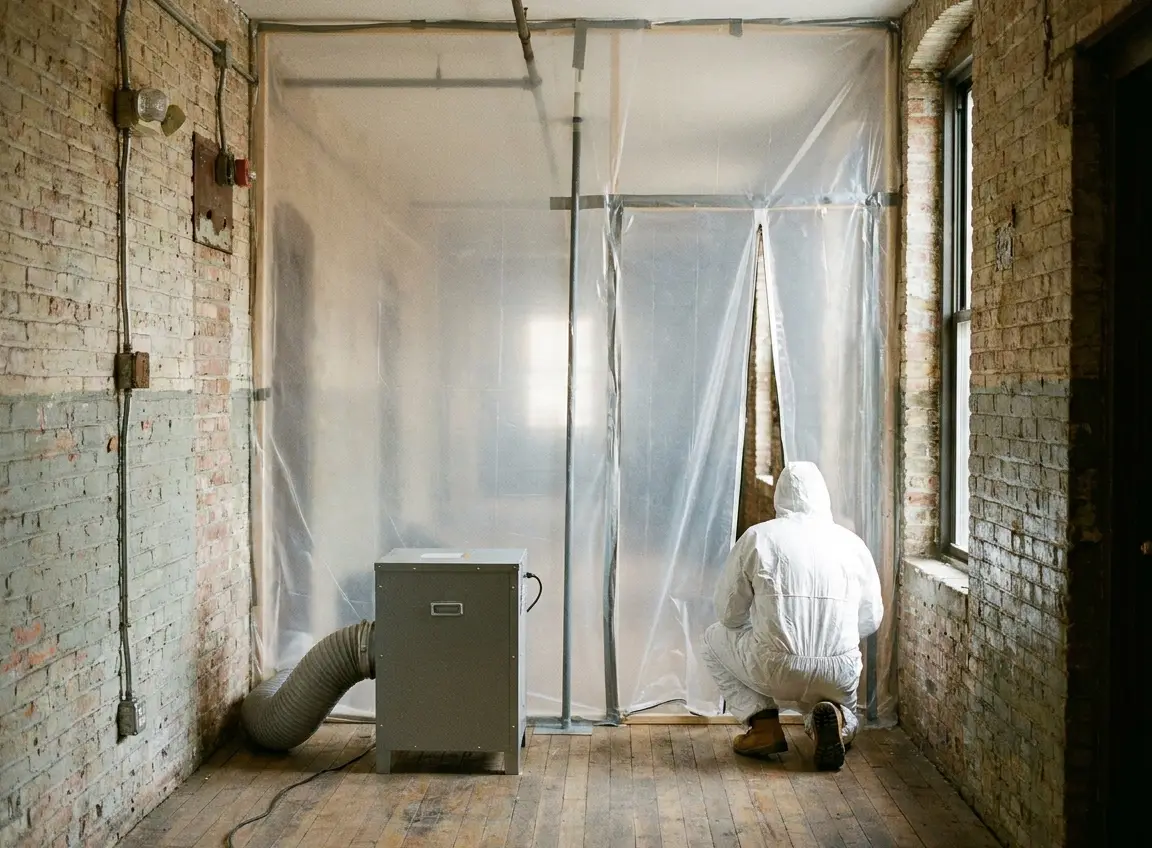 Commercial and rental buildingsApartments, rentals, offices and stores.Typical: $10 to $30 per sq ftSee details
How it works
- Step 1
Tell us what you see
Where the mold is, roughly how big, and what got wet. Photos help a lot.
- Step 2
Get a written scope and price
What gets contained, removed and cleaned, and what is causing it. Nothing is booked until you say yes.
- Step 3
Contain, remove, dry, check
The area is sealed off, the growth removed, everything dried, and the result checked before walls close.
Seeing mold or smelling it? Get a price.
Call, text or send the form with where it is and what got wet. We reply with a written scope before any work starts.
Updated
Mold remediation in Rockford, in short
Short answer
Illinois at a glance
- Remediator registration
- Required since Sep 23, 2026
- Certification deadline
- Sep 30, 2027
- Mold testers licensed?
- No
- DIY limit (EPA, IDPH)
- About 10 sq ft
- Dry wet materials within
- 24 to 48 hours
- Indoor humidity (EPA)
- 30 to 60 percent
- City of Rockford mold inspections
- None
From IDPH registration, IDPH Mold FAQs, EPA and the City of Rockford.
Pricing
What mold remediation costs in Rockford
Nobody publishes Rockford or Illinois mold remediation prices, so these are national ranges from three 2025 to 2026 cost guides. The largest one puts a typical job at $1,223 to $3,758, about $2,369 on average, and labor at $75 to $120 an hour.
Size and access drive the price more than anything: a bathroom ceiling is a few hundred dollars, a basement with wet drywall on three walls is thousands. Asbestos checks in older homes, HVAC work and rebuilding after are extra.
| Area | National range | Bigger jobs |
|---|---|---|
| Bathroom | $500 to $2,000 | |
| Crawl space | $500 to $4,000 | |
| Basement (part of it) | $500 to $6,000 | Whole basement: $6,000 to $15,000 |
| Attic | $1,000 to $9,000 | Whole attic: $6,000 to $15,000 |
| Inside wall cavities | $1,000 to $12,000 | |
| HVAC system and ductwork | $2,000 to $10,000 | |
| Air ducts only | $600 to $2,000 | |
| Whole house | $10,000 to $30,000 | |
| Mold inspection | $303 to $1,075 | One air or surface test: $250 to $350 |
Sources: National mold remediation cost guides (2025 to 2026 data); National mold inspection cost guides (2026 data)
Basement mold removal in Rockford
Typical: $500 to $6,000 (part of a basement; a whole basement $6,000 to $15,000)
Most mold calls around Rockford start in the basement. The city's housing is old: the median home was built in 1963 and 74.3% of its 67,423 housing units went up before 1980, per the Census Bureau. Basements that age take water through block joints, window wells and the floor crack, and the area's flood insurance claims are mostly basement claims.
The usual job: a plastic containment wall with a zipper door, an air scrubber venting outside, the bottom two to four feet of finished drywall and insulation cut out, joists and block HEPA-vacuumed and cleaned, carpet and pad pulled if they got wet, then a dehumidifier running until everything is back to normal. EPA guidance is to keep indoor humidity between 30 and 60 percent, and a Rockford basement in July rarely gets there on its own. The seepage gets named in the scope, because remediation without it comes back.
Attic mold remediation
Typical: $1,000 to $9,000 (for an attic, national guides)
Attic mold shows up as gray to black staining on the underside of the roof sheathing, usually on the north slope. In a northern Illinois winter the cause is almost always warm, wet house air reaching a cold roof deck: a bath fan venting into the attic instead of outside, soffit vents blocked by insulation, or air leaks around lights and the attic hatch. Rockford averages about 6,497 heating degree days a year in NOAA's normals, a long season for that condensation to build.
Remediation means HEPA-vacuuming and cleaning the sheathing and rafters, removing insulation that got wet or moldy, and fixing the ventilation path. If roofing work is coming anyway, that is the time to do it. Painting over attic mold with a "sealer" without fixing the airflow only hides it.
Crawl space mold removal
Typical: $500 to $4,000 (for a crawl space, national guides)
Crawl spaces under additions, porches and older Rockford-area homes stay damp: bare dirt, a torn or missing vapor barrier, vents letting humid summer air hit cool joists. The growth shows up as white fuzz and dark spotting on joists and the subfloor, and the smell drifts up into the rooms above because a lot of the house's air comes from below.
The work is tight and slow: HEPA vacuuming and cleaning the wood, removing damaged insulation, then a proper vapor barrier on the soil and a plan for the humidity. FEMA's flood records list crawl space buildings separately, and Machesney Park and Loves Park ZIPs have the most of them in Winnebago County.
Bathroom mold remediation
Typical: $500 to $2,000 (for a bathroom, national guides)
Spots on the ceiling around a weak exhaust fan and black lines in tub caulk are usually small enough to clean yourself: the EPA and IDPH both put the do-it-yourself line at about 10 square feet. See can you remove mold yourself.
It turns into remediation when the mold is behind the surround: a shower valve or drain that has leaked into the wall for months, soft drywall next to the tub, or growth that keeps coming back on the ceiling because the fan vents into the attic. Then the wall is opened inside containment, the wet framing dried and cleaned, and the leak or the fan fixed before tile goes back on.
HVAC and air duct mold
Typical: $2,000 to $10,000 (HVAC system; ducts alone $600 to $2,000)
A musty smell every time the furnace or air conditioner kicks on points at the system. The EPA names condensation at the cooling coil as a major cause of duct moisture, and in this area a furnace that sat in floodwater is the other. The EPA says sheet-metal ducts with substantial visible mold should be cleaned, insulated ducts that got wet or moldy should be replaced, and chemical biocides should not be allowed unless you understand the pros and cons.
Shut the system off once you suspect it, so it stops moving spores from room to room. Mold in the ducts almost always has a partner somewhere else: the basement wall behind the furnace, the joists above it, or a crawl space the return air pulls from. A good scope covers both, or the ducts are dirty again by the next cooling season.
Mold after water damage and flooding
Typical: $1,000 to $12,000 (for wall cavities after a leak or flood, national guides)
The EPA and IDPH say wet materials should be dried within 24 to 48 hours to keep mold from starting. After a burst pipe, a failed sump or a storm like July 13 to 14, 2024, when 4 to 6.5 inches of rain fell across most of Rockford in one night, that window passes fast. Winnebago County has 1,729 FEMA flood insurance claims on record since 1978, 50 of them from 2024.
Water-damage mold work starts with what got wet: carpet pad, the bottom of the drywall, insulation, the furnace. Sewer backup and river water are treated as contaminated and the porous material goes, per EPA guidance. Insurance treats sudden leaks and floods very differently; see does homeowners insurance cover mold in Illinois.
Black mold removal
Typical: $500 to $1,500 (for 10 to 100 sq ft, national guides)
The mold most people mean by "black mold" is Stachybotrys chartarum, which the CDC describes as a greenish-black mold that grows on drywall paper, fiberboard and other high-cellulose material that stays wet. CDC's NIOSH says color doesn't tell you how dangerous a mold is, and that Stachybotrys should be treated the same as other household molds.
So black mold is removed the same way: contain the area, cut out the drywall it is growing on, clean the framing, fix the leak, and check the result. Testing to find out the species does not change any of that.
Mold inspection and testing
Typical: $303 to $1,075 (for an inspection, national guides)
IDPH, the EPA and the CDC all say testing is usually unnecessary when you can see mold, and there are no federal or Illinois standards for safe indoor levels. What an inspection is good for is finding water: where the smell is coming from when the walls look clean, how far wet drywall runs behind a stain, and whether a cleanup worked. A moisture meter and a look behind the baseboard answer more than an air sample. Illinois does not license mold assessors.
Where sampling does earn its keep is after the work. The EPA says surface sampling can help confirm a cleanup worked, and a clearance check is worth it when someone in the home has asthma or a weak immune system. National guides put a single air or surface test at $250 to $350, so ask how many samples a report includes before you agree to one.
Commercial and rental buildings
Typical: $10 to $30 (per square foot, national guides)
45.1% of Rockford's households rent, and the City of Rockford says it does not inspect for mold, so landlords and property managers handle it themselves. Commercial jobs follow the EPA's guide for schools and commercial buildings, with containment that keeps occupied units clean. In buildings with five or more units, an asbestos inspection and an Illinois EPA notice can be required before walls come out.
Before you hire anyone
Check Illinois registration before you hire a mold company
Illinois changed the rules this fall. Under the Mold Remediation Registration Code, effective September 23, 2026, any person who performs mold remediation for someone else for pay must register with the Illinois Department of Public Health (IDPH). Registration takes proof of insurance, including pollution or mold coverage of at least $500,000 per occurrence, and a third-party certification from the IICRC, NORMI or another IDPH-approved body. People already in the trade have until September 30, 2027 to get certified.
Most mold companies around Rockford were advertising long before the rule existed, and pages written before September still say Illinois has no mold law. That is no longer true. It takes two minutes to check.
- 1Ask the question"Are you registered with IDPH, and who certified you?" A real answer names the certifying body.
- 2Look them upIDPH's Registered Mold Remediator Search Tool lists registered companies. A company can't be listed without a certified remediator on staff.
- 3See the insuranceAsk for the certificate of insurance and check for contractors pollution liability or a mold rider.
- 4Read the scopeIt should name the moisture source, the containment and what gets removed, not just "treat mold".
- Open the IDPH search tool
The insurance minimums, who is exempt and what the rule leaves out are in Illinois mold remediation registration.
The process
How mold remediation is done
The steps follow the ANSI/IICRC S520 standard most certified remediators train to: source removal, containment, and checking the work after. The full process, step by step.
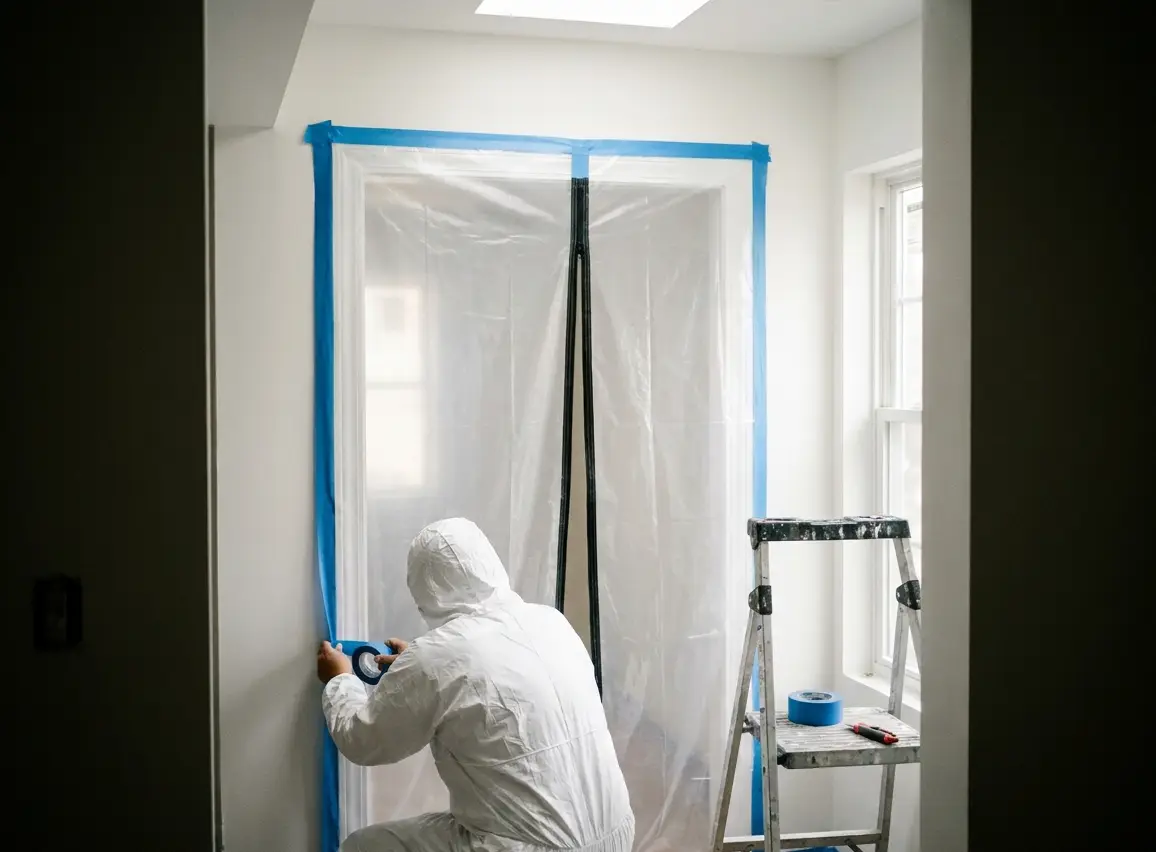
- 01
Find the water
The leak, seepage, condensation or flood, found with a moisture meter and named in the scope.
- 02
Contain
Plastic walls, a zipper door and negative air through a HEPA scrubber so spores stay in the work area.
- 03
Remove
Moldy drywall, insulation and carpet pad cut out and double-bagged inside containment.
- 04
Clean
Framing, block and hard surfaces HEPA-vacuumed and wet-cleaned.
- 05
Dry
Dehumidifiers and air movers until materials are back to normal moisture.
- 06
Check
Visible mold and odor gone, moisture fixed, before anything is closed up (the EPA's test).
Census numbers
Why Rockford houses get mold
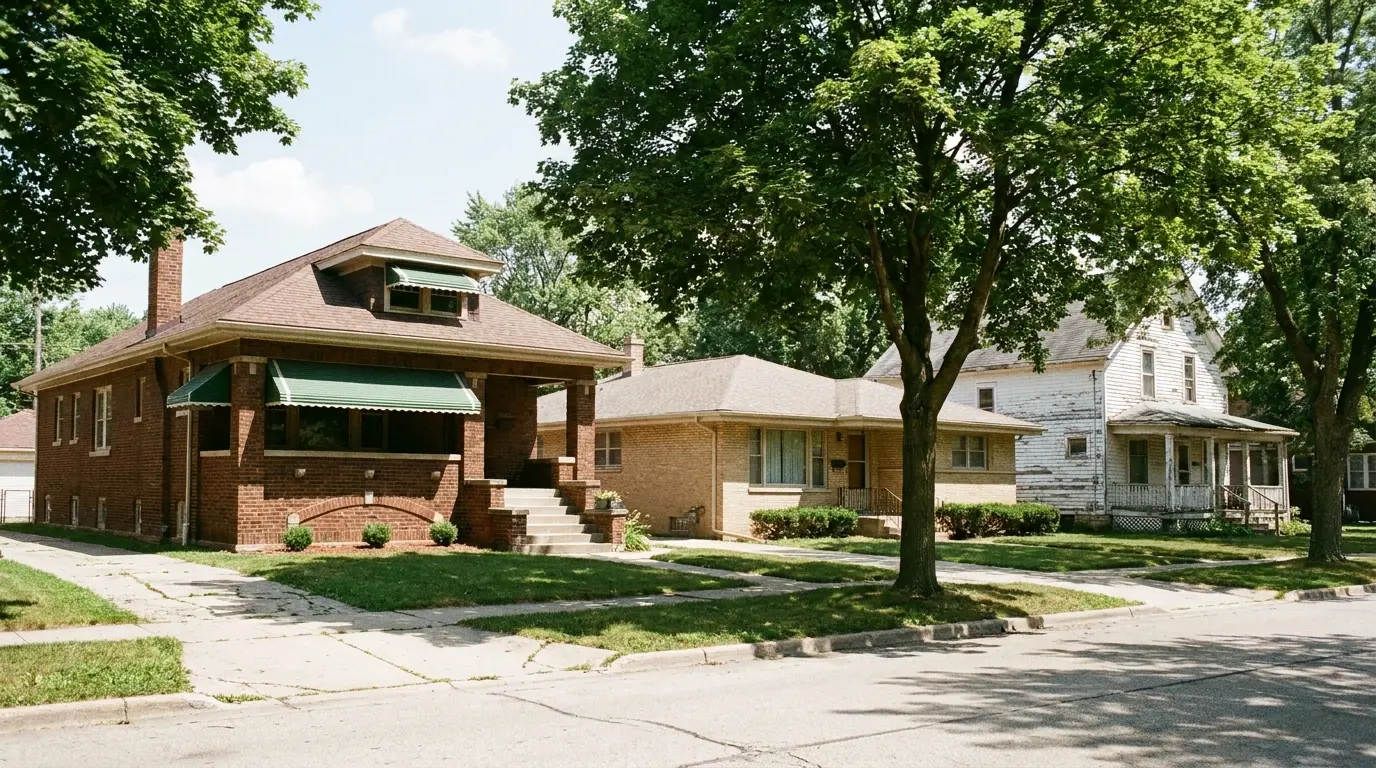
Rockford is an old housing town. The median home in the city was built in 1963, against 1971 for Winnebago County as a whole, and 74.3% of its 67,423 housing units, about 1 in 1, went up before 1980. 22.4% are older than 1940.
Old houses here usually mean basements: block or poured walls without modern waterproofing, window wells that fill, and furnaces and laundry down there with them. They also mean the materials of their time. Plaster, joint compound and floor tile in older homes can contain asbestos, and Illinois EPA advises having a qualified inspector check before renovation or demolition (Illinois EPA). Mold work that opens walls is renovation.
- 1963
- median year Rockford homes were built
- 74.3%
- built before 1980
- 22.4%
- built before 1940
- 45.1%
- of households rent
Source: U.S. Census Bureau, ACS 2020-2024 5-year, via Census Reporter
Water history
Rock River floods and the July 2024 storm
FEMA's flood insurance files hold 1,729 claims from Winnebago County since 1978, about $26.7 million paid. The spikes line up with the floods people here remember: 208 claims in 2007, 328 in 2008, 113 in 2019 and 50 in 2024 (OpenFEMA).
The Rock River at Rockton reached 15.13 feet in March 2019, its second-highest crest on record after 15.54 feet on March 25, 1975 (NOAA). On July 13 to 14, 2024, 4 to 6.5 inches of rain fell across most of Rockford overnight (NWS), and FEMA declared DR-4819-IL with Winnebago County on the individual assistance list (FEMA). Rockford's 61104 ZIP alone filed 31 claims that year.
Those counts are only insured homes. Every flood leaves a lot more basements that dried slowly behind finished walls.
| Town | FEMA flood claims | Median home |
|---|---|---|
| Machesney Park | 575 (61115) | 1978 |
| Loves Park | 131 (61111) | 1986 |
| Roscoe | 123 (61073) | 2001 |
| Rockton | 7 (61072) | 1996 |
| Belvidere | 24 (61008) | 1976 |
| Cherry Valley | 14 (61016) | 1997 |
Claims since 1978 by main ZIP, FEMA OpenFEMA; median year built, ACS 2020-2024.
Seasons
When mold shows up in a Rockford house
Rockford gets about 37 inches of rain a year in NOAA's 1991 to 2020 normals, and June is the wettest month at 5.23 inches (NWS). Late spring and summer are when basements seep, sump pumps run hard and humid air meets cool foundation walls. July 2024 was one of the wettest Julys on record in Rockford, per the National Weather Service (NWS).
Winter brings the other kind. With about 6,497 heating degree days a year, warm indoor air spends months leaking into cold attics and against cold windows and outside walls. That is when attic sheathing frosts, then drips, and when the closet on the north wall starts to smell. Spring snowmelt and the Rock River's spring crests, like March 2019, round out the year.
Signs
Signs of mold you can't see yet
- A musty, earthy smell in one room or when the furnace or air conditioner starts.
- Paint that bubbles or peels, or drywall that feels soft near the floor.
- A stain that keeps growing after you clean it, or comes back in the same place.
- A water line on basement walls or boxes after a storm, even if it dried.
- Frost or dark streaks on attic nails and roof boards in winter.
- Allergy-type symptoms that ease when you are away from home for a few days.
Any of these points at moisture first. Finding where it comes from is the real job; see do you need a mold test for when an inspection helps.
Insurance
Will insurance pay for mold?
Sometimes. The Illinois Department of Insurance says standard homeowners policies cover some sudden and accidental water damage and mold, like a burst pipe, but mold from slow leaks, seepage or humidity would probably not be covered. Flood is never covered by homeowners insurance, and sewer backup or sump failure needs an endorsement. In Illinois, mold from water damage after a covered fire or lightning loss is covered up to the full policy limit (IDOI).
Does homeowners insurance cover mold in Illinois walks through it case by case.
Health
Who should stay out, and when DIY is fine
The CDC lists stuffy nose, sore throat, coughing or wheezing, burning eyes and skin rash as common reactions, and worse ones for people with asthma or mold allergy (CDC). It says people with asthma, lung disease or weak immune systems should not be in a building with visible or smelled mold, and children should not help with cleanup.
For everyone else, the EPA and IDPH say an area under about 10 square feet is usually a do-it-yourself job with an N95 respirator, gloves and goggles. Above that, IDPH says a professional should do it. See can you remove mold yourself.
Service area
Rockford and the towns around it
All of Rockford on both sides of the Rock River, plus Loves Park, Machesney Park, Roscoe and Rockton up the river, and Cherry Valley and Belvidere along the Kishwaukee. Each town page has its own housing age, flood record and the office that enforces its property code. All service areas.
Guides
Mold questions people in Rockford ask
- Illinois Mold Laws: The 2026 Remediator Registration Rule
- Mold Removal vs Mold Remediation: The Real Difference
- Do You Need a Mold Test? What IDPH, the EPA and CDC Say
- Can Black Mold Be Fully Remediated? What the CDC Says
- Does Homeowners Insurance Cover Mold in Illinois?
- Is Mold Considered Uninhabitable in Illinois? Renters' Rules
- Can You Write Off Mold Remediation on Your Taxes?
- Can't Afford Mold Remediation? Help Around Rockford, IL
- Mold After a Flooded Basement in Rockford: The First 48 Hours
- Can You Remove Mold Yourself? The 10 Square Foot Rule
Common questions
Mold remediation questions from Rockford
How much does mold remediation cost in Rockford?
No Rockford or Illinois price data is published, so the honest numbers are national: a typical job runs $1,223 to $3,758, about $2,369 on average, or $10 to $30 per square foot. A bathroom is $500 to $2,000, part of a basement $500 to $6,000, an attic $1,000 to $9,000. Every range is on the cost page.
What's the difference between mold removal and mold remediation?
Illinois law defines mold remediation as the removal, cleaning, sanitizing, demolition or other treatment of mold, including prevention. Removal has no legal definition, and the EPA says no one can remove every mold spore indoors. See mold removal vs mold remediation.
What are the laws in Illinois regarding mold removal?
Since September 23, 2026, anyone doing mold remediation for pay in Illinois must register with IDPH, carry set insurance and hold a third-party certification, with a certification grace period to September 30, 2027. Mold testers are not licensed. See Illinois mold remediation registration.
Is mold considered uninhabitable in Illinois?
Illinois has no statute that says so. Tenants rely on the implied warranty of habitability, the Right to Repair Act and local code enforcement; IDPH and the City of Rockford say they do not inspect for mold. See is mold uninhabitable in Illinois.
Does homeowners insurance cover mold in Illinois?
Coverage usually applies only when the mold follows a sudden, covered water loss like a burst pipe. The Illinois Department of Insurance says slow leaks, seepage and humidity are probably not covered, and flood needs flood insurance. See does insurance cover mold.
Can I write off mold remediation on my taxes?
On the home you live in it usually is not. It is generally deductible on a rental, and damage from a federally declared disaster such as the July 2024 Winnebago County flooding may be a casualty loss. See can you write off mold remediation.
Can black mold be fully remediated?
The growth can be removed completely, like any mold. CDC/NIOSH says color doesn't tell you how dangerous a mold is and that Stachybotrys should be treated the same as other household molds. See can black mold be fully remediated.
Do I need a mold test before remediation?
A test is usually unnecessary if you can see it. IDPH, the EPA and the CDC all say testing is generally unnecessary when mold is visible, and there are no standards for safe indoor levels. See do you need a mold test.
What if I can't afford mold remediation?
Fix the moisture first, check insurance if the water was sudden, and look at the City of Rockford's repair programs and weatherization. IDPH has no funds for cleanup. See what if you can't afford mold remediation.
Is mold remediation dangerous?
Disturbing mold releases spores, which is why the work is done inside plastic containment under negative air. The CDC says people with asthma, lung disease or weak immune systems should stay out of a building with visible mold, and children should not help with cleanup.
Get the mold out and the water fixed
Rockford, Loves Park, Machesney Park, Belvidere, Roscoe, Rockton and Cherry Valley. Tell us where it is and get a written price first.