Can You Remove Mold Yourself? The 10 Square Foot Rule
Updated
Get a free quote
We reply with a price. Nothing is booked until you say yes.
Rather talk? Call (815) 420-4117 or text us.
Short answer
Part of mold remediation in Rockford, IL.
Where the line is
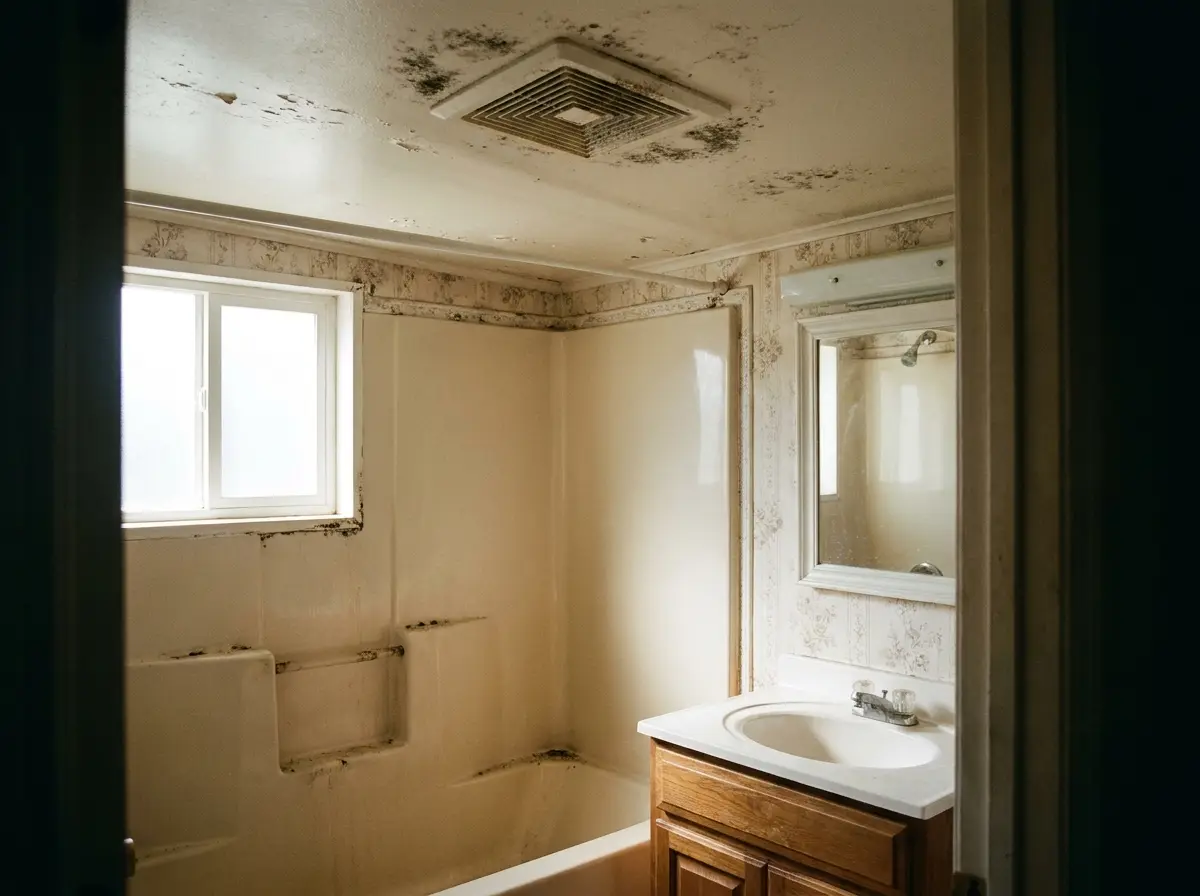
The EPA says that if the moldy area is less than about 10 square feet, "in most cases, you can handle the job yourself" (EPA, mold cleanup in your home). IDPH says a professional mold remediator should clean up areas of growth larger than 10 square feet (IDPH Mold FAQs). The EPA also says to get help if the water was sewage or contaminated floodwater, if there's been a lot of water damage, or if mold may be in the heating and cooling system.
Who should not do it
The CDC says people with asthma or lung disease and people with weak immune systems should not go into a building with visible or smelled mold, and children should not help with cleanup (CDC).
Gear
- An N95 respirator, or a half-face respirator with HEPA filters. A dust mask is not enough.
- Long gloves (nitrile or rubber) and goggles without vent holes.
- Heavy plastic bags to double-bag what you throw out.
- A HEPA vacuum if you have one; a regular shop vac blows spores around.
The IDPH steps
- Fix the water problem first: the leak, condensation or seepage.
- Dry the area within 24 to 48 hours of any new wetting.
- Throw out porous material that is heavily moldy: ceiling tile, carpet, drywall, insulation.
- Mist the moldy surface lightly before you touch it to keep spores down.
- Double-bag debris before carrying it through the house.
- HEPA-vacuum, then wet-clean hard surfaces and dry them.
Don't paint or caulk over mold; the EPA says it will peel. If the mold comes back in the same spot, the moisture source is still there.
Signs it is bigger than it looks
- A musty smell in a room where you see only a small spot: growth is usually behind the drywall or under flooring.
- Soft drywall, bubbling paint or a stain that keeps growing after you clean.
- Mold on more than one wall, or on the joists above a basement ceiling.
- A smell when the furnace or AC runs. See air duct mold removal.
Many Rockford houses are old enough to have asbestos in plaster, joint compound or floor tile: the median home in the city was built in 1963. Illinois EPA advises having a qualified inspector check before renovation and not disturbing suspect material (Illinois EPA). Cutting into old walls is where a DIY job can go wrong.
A professional job on 10 to 100 square feet runs $500 to $1,500 in national guides; the rest is on the mold remediation cost page. The professional services are on the mold remediation Rockford homepage.
Want a price for your own home?
Call, text, or send the form with where the mold is and what got wet. You get a written price before any work starts.
Quick answers
Can I remove mold myself?
The EPA and IDPH say areas under about 10 square feet are usually fine to clean yourself with an N95 respirator, gloves and goggles, after fixing the moisture. Larger areas should go to a professional, per IDPH.
Does bleach kill mold?
The EPA's home cleanup guidance focuses on removing mold and drying the area rather than killing it; mold on porous material like drywall or carpet should be thrown out, not bleached. Never mix bleach with ammonia.
Is a mold remediation kit enough?
For a small area on hard surfaces, cleaning supplies plus an N95 respirator, gloves and goggles are what the EPA and IDPH describe. A kit does nothing about the moisture source, which is what decides whether it returns.
When should I call a professional for mold?
When the area is over about 10 square feet, the water was sewage or floodwater, mold is in the HVAC, it is inside walls, or someone in the home has asthma or a weak immune system.
Rather have it handled?
Tell us where the mold is and what got wet. We reply with a written price first, and nothing starts until you agree.